Read&write For Mac
READ(2) Linux Programmer's Manual READ(2) NAME read - read from a file descriptor SYNOPSIS #include ssizet read(int fd, void. buf, sizet count ); DESCRIPTION read attempts to read up to count bytes from file descriptor fd into the buffer starting at buf. On files that support seeking, the read operation commences at the file offset, and the file offset is incremented by the number of bytes read. If the file offset is at or past the end of file, no bytes are read, and read returns zero. If count is zero, read may detect the errors described below.
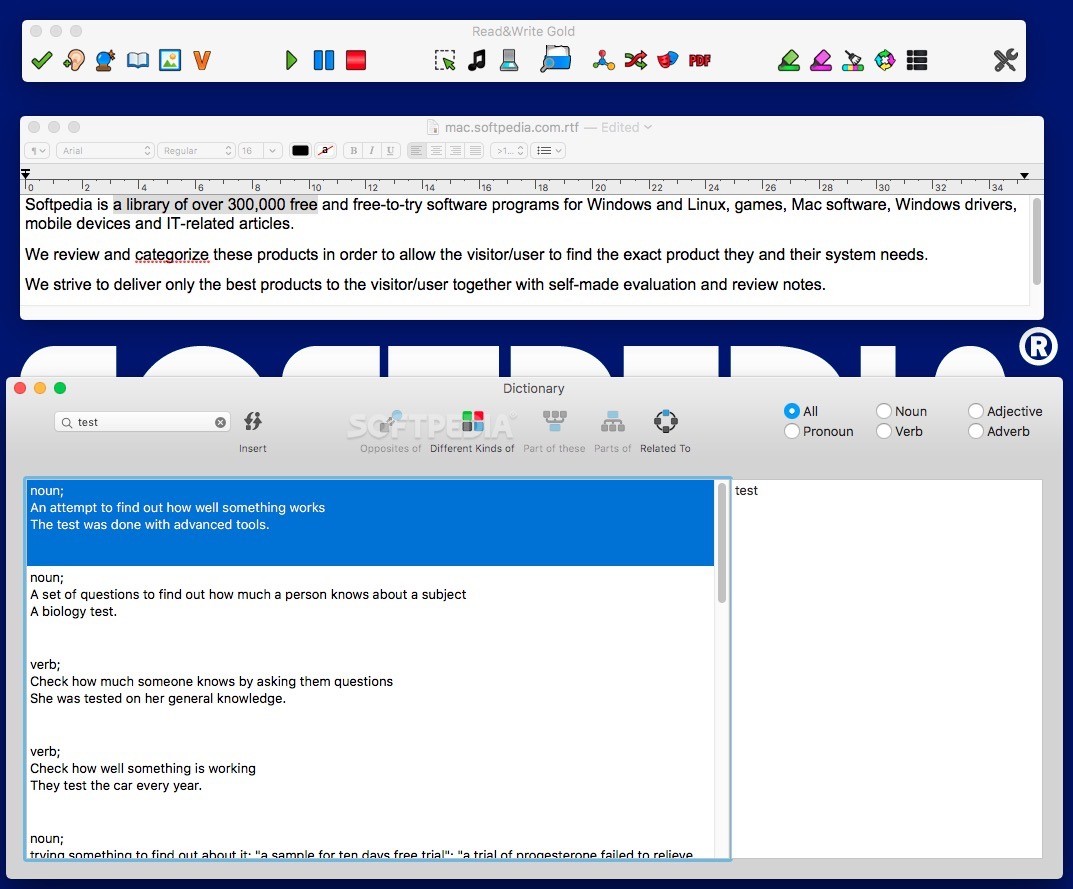
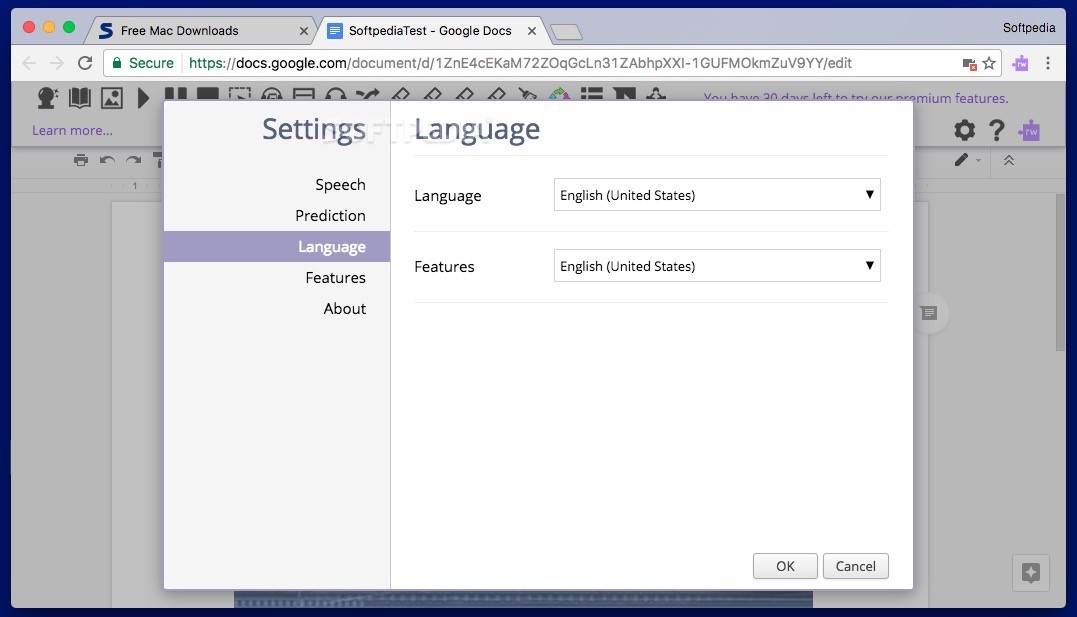
A big literacy booster Read&Write for Mac is designed to help users of Apple Macintosh computers by providing extra literacy supports. Read&Write for Mac provides support tools for the web and common file types and applications, including.
In the absence of any errors, or if read does not check for errors, a read with a count of 0 returns zero and has no other effects. According to POSIX.1, if count is greater than SSIZEMAX, the result is implementation-defined; see NOTES for the upper limit on Linux. RETURN VALUE On success, the number of bytes read is returned (zero indicates end of file), and the file position is advanced by this number. It is not an error if this number is smaller than the number of bytes requested; this may happen for example because fewer bytes are actually available right now (maybe because we were close to end-of- file, or because we are reading from a pipe, or from a terminal), or because read was interrupted by a signal. See also NOTES.
On error, -1 is returned, and is set appropriately. In this case, it is left unspecified whether the file position (if any) changes. ERRORS EAGAIN The file descriptor fd refers to a file other than a socket and has been marked nonblocking ( ONONBLOCK), and the read would block. See for further details on the ONONBLOCK flag. EAGAIN or EWOULDBLOCK The file descriptor fd refers to a socket and has been marked nonblocking ( ONONBLOCK), and the read would block. POSIX.1-2001 allows either error to be returned for this case, and does not require these constants to have the same value, so a portable application should check for both possibilities. EBADF fd is not a valid file descriptor or is not open for reading.
EFAULT buf is outside your accessible address space. EINTR The call was interrupted by a signal before any data was read; see. EINVAL fd is attached to an object which is unsuitable for reading; or the file was opened with the ODIRECT flag, and either the address specified in buf, the value specified in count, or the file offset is not suitably aligned. EINVAL fd was created via a call to and the wrong size buffer was given to read; see for further information. EIO I/O error. This will happen for example when the process is in a background process group, tries to read from its controlling terminal, and either it is ignoring or blocking SIGTTIN or its process group is orphaned.
It may also occur when there is a low-level I/O error while reading from a disk or tape. A further possible cause of EIO on networked filesystems is when an advisory lock had been taken out on the file descriptor and this lock has been lost. See the Lost locks section of for further details. EISDIR fd refers to a directory.
Other errors may occur, depending on the object connected to fd. CONFORMING TO SVr4, 4.3BSD, POSIX.1-2001. NOTES The types sizet and ssizet are, respectively, unsigned and signed integer data types specified by POSIX.1. On Linux, read (and similar system calls) will transfer at most 0x7ffff000 (2,147,479,552) bytes, returning the number of bytes actually transferred.
(This is true on both 32-bit and 64-bit systems.) On NFS filesystems, reading small amounts of data will update the timestamp only the first time, subsequent calls may not do so. This is caused by client side attribute caching, because most if not all NFS clients leave statime (last file access time) updates to the server, and client side reads satisfied from the client's cache will not cause statime updates on the server as there are no server-side reads. UNIX semantics can be obtained by disabling client-side attribute caching, but in most situations this will substantially increase server load and decrease performance. BUGS According to POSIX.1-2008/SUSv4 Section XSI 2.9.7 ('Thread Interactions with Regular File Operations'): All of the following functions shall be atomic with respect to each other in the effects specified in POSIX.1-2008 when they operate on regular files or symbolic links. Among the APIs subsequently listed are read. And among the effects that should be atomic across threads (and processes) are updates of the file offset. However, on Linux before version 3.14, this was not the case: if two processes that share an open file description (see ) perform a read (or ) at the same time, then the I/O operations were not atomic with respect updating the file offset, with the result that the reads in the two processes might (incorrectly) overlap in the blocks of data that they obtained.
This problem was fixed in Linux 3.14. SEE ALSO, COLOPHON This page is part of release 4.16 of the Linux man-pages project. A description of the project, information about reporting bugs, and the latest version of this page, can be found at.
Linux 2018-02-02 READ(2) Pages that refer to this page:,.
Library of Congress Literacy Awards Applications open January 14, 2019 to March 8, 2019. Through the generosity of David M. Rubenstein, the recognize and support organizations that have made outstanding contributions to increasing literacy in the United States or abroad. The Literacy Awards program encourages the continuing development of innovative methods and is intended to draw public attention to the importance of literacy. The program was established in 2013 and is administered by the Library’s Center for the Book. Discover Great Places Through Reading Every year, a list of books representing the literary heritage of the 50 states, the District of Columbia and the U.S.
Virgin Islands is distributed by the Library of Congress's during the. Each book is selected by a Center for the Book or state library and most are for children and young readers. Books may be written by authors from the state, take place in the state, or celebrate the state’s culture and heritage.
Discover great reads with our interactive map of the book list or view the original brochures and printable book lists. American Conversations: Celebrating Poems in Rural Communities “American Conversations: Celebrating Poems in Rural Communities” is 22nd U.S. Poet Laureate Tracy K.
Smith’s second-year project. In the months to come, she will visit rural communities around the country and engage Americans in conversations about poetry. Follow along with Tracy K. Smith as she chronicles her conversations, experiences, and reflections on the road. Festivals The is the Library's annual celebration of books and reading. Authors from across the country entertain participants with insights into their work. Other book festivals and literary events are held nationwide.
Read Write Mac Drive
There is probably one near you. Books Online and Suggested Reading Lists Throughout Read.gov, you will find for readers of all ages that have been digitized for online reading, as well as lists of that may be obtained at your local library. Braille Literacy The National Library Service for the Blind and Physically Handicapped makes it possible for Americans living with visual impairment to enjoy a good book, magazine and even music scores.