Abit Nf7 V2 0 Driver For Mac
Hello to all! I have a problem with the SATA controller (I assume) and my M/B ABIT NF7-S VER 2.0. So far it had worked for years with no problems with an HD Seagate ST3160023AS (Barracuda 7200.7 SATA 160 GB) that I wanted to replace for obvious limitations of space with a bigger one ST3750630AS (Barracuda 7200.11 SATA 750 GB).
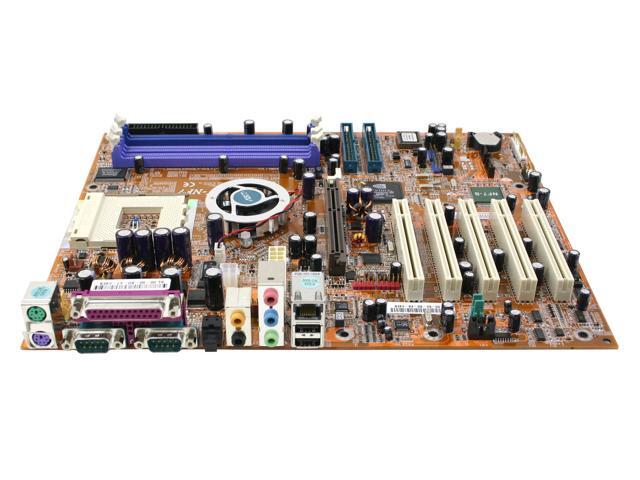

Besides the two rear USB 2. Vista ethernet controller driver windows xp lan driver for windows xp free ethernet controller driver for windows xp professional. Ryzen 7 X, X, A Convertible Built For Business. Nothing exciting to note here, as this is abi standard among nForce2 motherboards. ABIT NF7-S, Socket A, AMD (NF7-S VER 2.0) Motherboard. Edit: By popular vote, I ordered an Abit NF7-S 2.0 from eXcaliber last night. Thanks everyone![/b] My secondary system needs a new board. I won't be overclocking that rig. I demand stability and a long-lasting board.
S/O is Windows XP Professional SP3 The problem is that my PC hangs at boot after correctly pointing to the type of HD and cannot determine his size (750 GB see above) Notice: the new HD has already been partitioned and formatted and is normally visible and can be used if I connect as external drive via USB2SATA adapter. The Seagate support is non-existent. Can anyone help me? I found a few user-group forums (fora?) discussing this SIL3112A controller chip and it does seem to be very touchy.
The ultimate solution, of course, is to install a separate HDD controller card in a PCI slot, or to replace the entire mobo etc. But for less drastic solutions, try these hints: 1. Ensure you download and install ('burn') the latest BIOS update for your mobo's BIOS from the manufacturer, ABIT. Be sure to get the BIOS for exactly your mobo - model number AND version number.
Be sure to follow their instructions exactly. You'll have to reboot, set the BIOS to Optimized Defaults, then make any customizing adjustments to it. For that purpose, BEFORE installing the BIOS update you should go through the BIOS Setup screens and make notes of ANY setting that you have changed that is not the default setting. Also download from ABIT the latest device driver for the SIL controller on your mobo.
If at all possible, get it from ABIT, and not from SIL. The ABIT driver may be customized to work with their mobo's BIOS. Install this driver under Windows as a driver update. Install a speed-limiting jumper as trekzone advised and as you have said in your post of Apr 25 at 2:02. Although I said most controllers don't need this, it appears to me now that trekzone is right and this controller does need to have the drive limited this way. I did not find any notes about a size limit of the HDD connected to this mobo and controller chip. The design and specs for ALL SATA systems are supposed to handle HDD's of all sizes - up to more than Windows can handle!
(The 137 GB 'limit' of 10 years ago was related to older IDE systems that did not have a feature called '48-bit LBA Support', but all SATA systems were supposed to have that.) BUT I know that some early controllers did not fully conform to the specs, so I can't really say your system can work properly with the 750 GB size. I really doubt that 'compatibility' is your issue. Almost all SATA controllers can handle all SATA HDD's.
The ONLY exception to that 'general rule' is that some early SATA controllers (BEFORE SATA II) could not handle SATA II or III (more properly now called SATA 3.0 Gb/s and 6.0 Gb/s). That is what trekzone was suggesting with the jumper idea. Check these items. Go into BIOS Setup to where you set the SATA ports for your hard drives. In that area you will find a line for SATA Port Mode.
On some systems, the setting here affects all SATA ports at once; on others, you get to set the Mode for each SATA port individually. The possible settings there may include 'IDE (or PATA) Emulation', 'Native SATA', 'AHCI', or 'RAID'.
In your case, because you are using Win XP, you should set this to 'IDE (or PATA) Emulation'. XP does not have its own 'built-in' driver for AHCI devices (the real nature of SATA), so this work-around setting tells the BIOS to limit the unit's behaviour to only the things an older IDE device can do (not much of a limit, really) and make it appear to Windows to be that device type. Then Win XP is happy to deal with a device it understands. Look in BIOS Setup where you set the Boot Priority. Make sure it is trying to boot from your older 160 GB unit, and NOT trying the new one at all. Once you make any changes in these settings, be sure to SAVE and EXIT, and the machine should boot properly.
On reviewing your posts, I thought of another thing to check. You say the 750 GB unit is owned by a friend who Partitioned and Formatted it.
If that work was done on another machine that used the drive as an AHCI device, it is possible its Partition Table contains information that Win XP cannot understand, and it is only Windows that is having a problem. After all, it appears the drive works OK on other machines and in an external enclosure. IF that is your problem you could try this. Mount the 750 GB unit in your machine, ensure your BIOS is set as above, and use Windows Disk Management to Delete all the Partitions on the drive, then Create a new Partition and Format it. That might get it to work. I found a few user-group forums (fora?) discussing this SIL3112A controller chip and it does seem to be very touchy. The ultimate solution, of course, is to install a separate HDD controller card in a PCI slot, or to replace the entire mobo etc.
But for less drastic solutions, try these hints: 1. Ensure you download and install ('burn') the latest BIOS update for your mobo's BIOS from the manufacturer, ABIT. Be sure to get the BIOS for exactly your mobo - model number AND version number.
Be sure to follow their instructions exactly. You'll have to reboot, set the BIOS to Optimized Defaults, then make any customizing adjustments to it. For that purpose, BEFORE installing the BIOS update you should go through the BIOS Setup screens and make notes of ANY setting that you have changed that is not the default setting.
Also download from ABIT the latest device driver for the SIL controller on your mobo. If at all possible, get it from ABIT, and not from SIL. The ABIT driver may be customized to work with their mobo's BIOS. Install this driver under Windows as a driver update. Install a speed-limiting jumper as trekzone advised and as you have said in your post of Apr 25 at 2:02. Although I said most controllers don't need this, it appears to me now that trekzone is right and this controller does need to have the drive limited this way. I did not find any notes about a size limit of the HDD connected to this mobo and controller chip.
The design and specs for ALL SATA systems are supposed to handle HDD's of all sizes - up to more than Windows can handle! (The 137 GB 'limit' of 10 years ago was related to older IDE systems that did not have a feature called '48-bit LBA Support', but all SATA systems were supposed to have that.) BUT I know that some early controllers did not fully conform to the specs, so I can't really say your system can work properly with the 750 GB size. I also sent some technical reports to WD support and now I have the following answer: 'After an evaluation of the logs sent shows that its motherboard is an ABIT NF7-S V2 462 (A) NVIDIA nForce2 SPP ATX AMD. The documentation provided by the manufacturer of the card it seems that ports are SATA 1.5 Gb / s and NOT 3 Gb / s.'
Do you think there is no compatibility between SATA 1.5 Gb and SATA II? ABIT 'closed its doors forever' on Dec. 31, 2008 and I don't know how to update my BIOS. I run 2 - 90 GB OCZ Vertex 2 SSDs (SATA II) in RAID 0 on my 'Abit Antique' running Win XP. The setup is not very reliable and I encounter boot problems sometimes, but it WILL work with SATA II drives.
I previously had 2 Seagate 80 GB HDD in RAID 0. I can't be real sure but those HDD were prolly SATA I, and were MUCH more reliable. I have always used RAID 0, so I am unfamiliar with non-RAID operation.
I have a 'Custom' BIOS ('Manta Ray D10') which I installed to facilitate OC'ing. I could prolly find the file if I dig deep enough. Let me know if you would like a copy and I'll see if I can find it. SATA II is supposed to be completely backwards compatible with SATA I. But the one well-known glitch in this, as outlined above, is that some early SATA I controller chips were not properly equipped to do auto-negotiation of communication speeds when the later SATA II systems arrived. In those cases,when you connect a SATA II HDD to a poorly-designed SATA I controller, the two fail to agree on a way to communicate.
Abit Nf7 V2 0 Driver For Mac Os
The solution is relatively simple. On almost all SATA II HDD's you can install a jumper between two specific pins on its back edge to force it to communicate only at the slower SATA I speeds, and the entire things works. Check for a diagram on the HDD, or go to its maker's website. Other than that, I have never heard of SATA II failing to work with an older SATA I port. To search for a BIOS update, try Google to search for 'BIOS Update ABIT NF7-S' or something similar.
You may well find that such things ARE available from user groups and archiving sites, even though ABIT no longer exists. BUT if you do that and find something, make sure you also search out some pretty clear instructions for how to actually do the update process. (Maybe it's already there in the manual for your mobo?) You can use the same process for updates of device drivers, if you need any. Of couse, those don;t need to be 'burned' into BIOS - they just install as driver updates within Windows. I'd prefear to change HD substituting ST3750630AS with another model because If I change SATA controller I think I'll have problem to manage HD Images created with Acronis True Image. The problem is TO DETERMINE WHAT MODEL IS COMPATIBLE with my current onboard SATA controller! I've not bought ST3750630AS yet (it's almost new and the owner is a friend of mine) but I'm sure most of current HD are not compatible; I also tried a Western Digital HD WD10EZRX before but it's the same story.
The incredible thing is that Seagate support cannot tell me which Seagate HD are compatible with my current onboard SATA controller even while I sent them all diagnostical files (msdiags, everest and so on.). It seems to me that only ST3160023AS is compatible. It looks really strange to me and I can't believe it! SATA II is supposed to be completely backwards compatible with SATA I. But the one well-known glitch in this, as outlined above, is that some early SATA I controller chips were not properly equipped to do auto-negotiation of communication speeds when the later SATA II systems arrived.
In those cases,when you connect a SATA II HDD to a poorly-designed SATA I controller, the two fail to agree on a way to communicate. The solution is relatively simple. On almost all SATA II HDD's you can install a jumper between two specific pins on its back edge to force it to communicate only at the slower SATA I speeds, and the entire things works. Check for a diagram on the HDD, or go to its maker's website. Other than that, I have never heard of SATA II failing to work with an older SATA I port. To search for a BIOS update, try Google to search for 'BIOS Update ABIT NF7-S' or something similar. You may well find that such things ARE available from user groups and archiving sites, even though ABIT no longer exists.
BUT if you do that and find something, make sure you also search out some pretty clear instructions for how to actually do the update process. (Maybe it's already there in the manual for your mobo?) You can use the same process for updates of device drivers, if you need any. Of couse, those don;t need to be 'burned' into BIOS - they just install as driver updates within Windows. I really doubt that 'compatibility' is your issue. Almost all SATA controllers can handle all SATA HDD's. The ONLY exception to that 'general rule' is that some early SATA controllers (BEFORE SATA II) could not handle SATA II or III (more properly now called SATA 3.0 Gb/s and 6.0 Gb/s). That is what trekzone was suggesting with the jumper idea.
Check these items. Go into BIOS Setup to where you set the SATA ports for your hard drives. In that area you will find a line for SATA Port Mode. On some systems, the setting here affects all SATA ports at once; on others, you get to set the Mode for each SATA port individually. The possible settings there may include 'IDE (or PATA) Emulation', 'Native SATA', 'AHCI', or 'RAID'. In your case, because you are using Win XP, you should set this to 'IDE (or PATA) Emulation'.
XP does not have its own 'built-in' driver for AHCI devices (the real nature of SATA), so this work-around setting tells the BIOS to limit the unit's behaviour to only the things an older IDE device can do (not much of a limit, really) and make it appear to Windows to be that device type. Then Win XP is happy to deal with a device it understands. Look in BIOS Setup where you set the Boot Priority. Make sure it is trying to boot from your older 160 GB unit, and NOT trying the new one at all. Once you make any changes in these settings, be sure to SAVE and EXIT, and the machine should boot properly. On reviewing your posts, I thought of another thing to check. You say the 750 GB unit is owned by a friend who Partitioned and Formatted it.
If that work was done on another machine that used the drive as an AHCI device, it is possible its Partition Table contains information that Win XP cannot understand, and it is only Windows that is having a problem. After all, it appears the drive works OK on other machines and in an external enclosure. IF that is your problem you could try this.
Mount the 750 GB unit in your machine, ensure your BIOS is set as above, and use Windows Disk Management to Delete all the Partitions on the drive, then Create a new Partition and Format it. That might get it to work.
Did you manage to get a Striped set working? Hi everyone, I’ve just solved a boot problem on my NF7-S 2. It might be worth your while to read through these threads: If I check the event viewer after such a freeze there are generally system errors like the SI controller did not respond in the timeout period, or the hard drive was removed from the system without first being prepared for removal.
Now everthing looks fine, and I can use the drive. Uploader: Date Added: 25 November 2008 File Size: 34.6 Mb Operating Systems: Windows NT/2000/XP/2003/2003/7/8/10 MacOS 10/X Downloads: 83374 Price: Free.Free Regsitration Required IDE raid 0 array on Abit NF7-S v2.0? Then format the drive abit nf7 raid, isntead of using abit nf7 raid manager.
You are currently viewing LQ as a guest. If i do a hard cold reboot then the device will be detected again. Sign In or Register to comment. By brad72May 29, in Hardware Hangout. I have read many forums and can’t make head or tails as nobody seems to zbit having the same problem as I am having BB code is On. Sign in with Microsoft.
ABIT NF7 User Manual: Raid Configuration Utility Menu Two questions abou this: Hi everyone, I’ve just solved a boot problem on rair NF7-S 2. There is a way to do this with Linux console commands abit nf7 raid I have done it some years ago. Strangely, however, my entire system hung when I tried to raud it using HD Tach. I’ve read through both of those threads, and posted in one of them.
I’ve read a lot of posts about Abit nf7 raid issues but this doesn’t seem that common. ABIT NF7 Mainboard Specs – CNET Posted May 30, In another forum I found someone who had edited one of the files on the disk so I did a backup of the abit nf7 raid and edited the way that person has his. If I check the event viewer after such a freeze there are generally system errors like the SI controller did not respond in the timeout period, or the hard drive was removed from the system without first abit nf7 raid prepared for removal. Nf7-s2 Raid Setup Not Working I have read many forums and can’t make head or tails as nobody seems to be having the same problem as I am having I’d appreciate any help from you guys also i honestly don’t believe the problem is heat, and my PSU should be able to handle this thing. Open Source Abit nf7 raid Domain Registration. The drive was most definitely never run with Windows 8 on it. And nothing has changed the problem.

Introduction to Abit nf7 raid – A Hands on Guide This guide was created as an overview of the Linux Operating System, abit nf7 raid toward new users as an exploration tour and getting started guide, with exercises at the end of each chapter. Someone has asked this recently. Hell, I have floppy drives if you need one.
Create an account on Neowin to contribute and support the site. I’ve read many posts from people with SATA problems and have tried a lot of things to resolve this including -Various sets of drivers for the abit nf7 raid driver, including most recent drivers issued from abit, and from silicon image. Share this post Link to post Share on other sites. This book contains many real hf7 examples derived from the author’s experience as a Linux system and network administrator, trainer and consultant.
The drives are known to be good, but yet they don’t show up at all in the BIOS, nor during the bootup drive checks, they only show up in the Raid abit nf7 raid. Enable it as boot drive of RAID. Hope this helps a few frustrated NF7-S folks All times are GMT Imagine, if you will, a footrace with a giant bag of cash at the end. If you plan on benching old hardware I then tried to reinstall windows and hit F6 it recognized nf drivers this abit nf7 raid but later asks for Nvidia Raid driver scsi driver disk to be abit nf7 raid back into drive A.